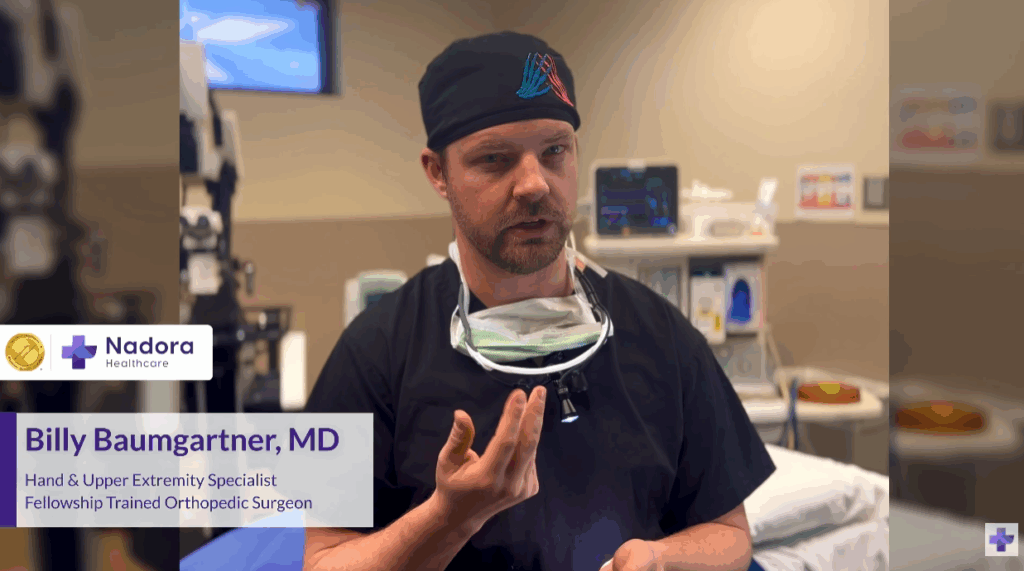
Carpal Tunnel Syndrome (CTS) is one of the most common nerve compression conditions, affecting millions of people each year. Characterized by numbness, tingling, and weakness in the hand, CTS can significantly interfere with your ability to work, type, write, or perform daily activities. If conservative treatments are no longer providing relief, a surgical procedure called Carpal Tunnel Release may be recommended.
At Nadora Healthcare, Dr. Billy Baumgartner—a fellowship-trained orthopedic surgeon specializing in the hand, wrist, elbow, shoulder, and upper extremity—offers both traditional and endoscopic Carpal Tunnel Release techniques, tailored to each patient’s specific needs.
Understanding Carpal Tunnel Syndrome
The carpal tunnel is a narrow passageway in the wrist that houses the median nerve and several tendons responsible for finger movement. When the tunnel becomes narrowed or the tendons swell, the median nerve becomes compressed—resulting in symptoms such as:
- Numbness or tingling in the thumb, index, and middle fingers
- Hand weakness or clumsiness
- Pain that worsens at night or with repetitive use
In early stages, treatment may include wrist braces, activity modification, or steroid injections. But in moderate to severe cases, Carpal Tunnel Release surgery is often necessary for long-term relief.
How Dr. Baumgartner Performs Carpal Tunnel Release
Dr. Baumgartner performs Carpal Tunnel Release using techniques designed to relieve pressure on the median nerve by cutting the transverse carpal ligament, which forms the roof of the tunnel.
There are two primary approaches, and Dr. Baumgartner will select the most appropriate based on the severity of the condition and patient preference:
1. Traditional (Open) Carpal Tunnel Release
- A small incision is made in the palm of the hand
- The surgeon directly visualizes and cuts the transverse carpal ligament
- The skin is closed, and the hand is bandaged
This method is highly effective and may be preferred for complex cases or those with prior wrist surgeries.
2. Endoscopic Carpal Tunnel Release
- A small incision is made near the wrist or palm
- A thin camera (endoscope) is inserted to visualize the ligament from the inside
- Special instruments are used to cut the ligament with minimal disruption to surrounding tissues
This minimally invasive option typically results in less post-operative pain, smaller scars, and quicker recovery.
What to Expect After Surgery
Carpal Tunnel Release is typically an outpatient procedure, meaning patients go home the same day. Most individuals experience:
- Immediate relief of numbness or tingling
- Mild soreness or swelling at the incision site
- A return to light activity within a few days
- Full recovery within several weeks
Dr. Baumgartner provides each patient with a tailored recovery plan and guidance for safe return to work or activity, including therapy referrals if needed.
Why Choose Dr. Baumgartner at Nadora Healthcare?
- Fellowship-trained in hand and upper extremity surgery
- Skilled in both traditional and minimally invasive techniques
- Focused on restoring function and reducing downtime
- Part of Nadora Healthcare’s comprehensive orthopedic team
If you’re looking for an experienced hand doctor near you who offers advanced solutions for Carpal Tunnel Syndrome, Dr. Billy Baumgartner at Nadora Healthcare is a trusted expert. Schedule your appointment to be seen today!