Carpal Tunnel Syndrome (CTS) is a common condition caused by compression of the median nerve as it passes through the carpal tunnel in the wrist. Patients with CTS often experience numbness, tingling, weakness, or pain in the hand and fingers—especially at night or during repetitive hand movements. When non-surgical treatments fail, Carpal Tunnel Release becomes a highly effective option.
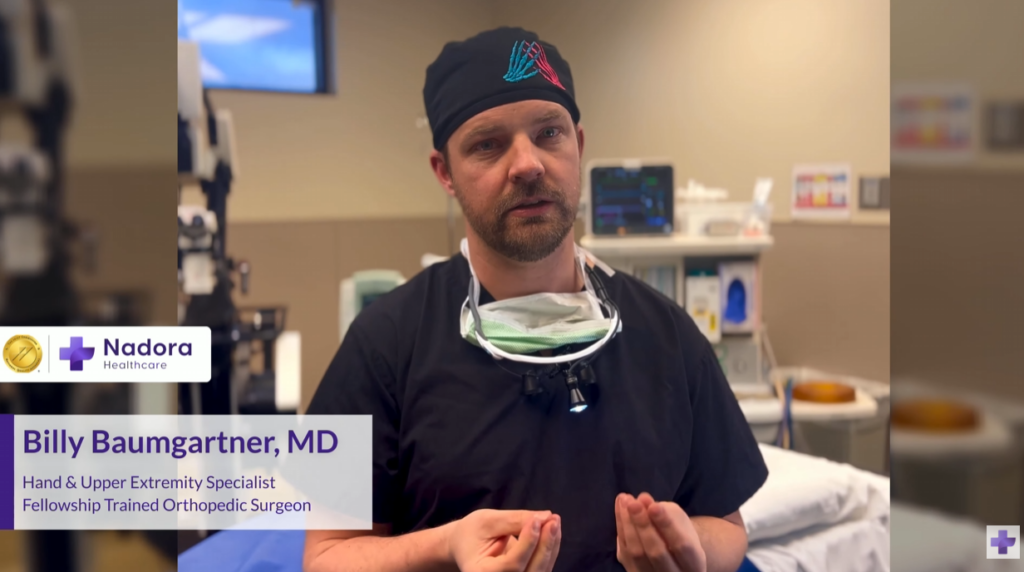
At Nadora Healthcare, Dr. Billy Baumgartner, a fellowship-trained orthopedic surgeon specializing in hand, wrist, elbow, shoulder, and upper extremity conditions, offers both traditional and endoscopic surgical techniques for carpal tunnel relief.
Traditional Carpal Tunnel Release (Open Surgery)
Open Carpal Tunnel Release is the most time-tested approach to surgical CTS treatment. Here’s how it works:
- A small incision is made in the palm, over the carpal tunnel.
- The surgeon carefully divides the transverse carpal ligament, which relieves pressure on the median nerve.
- The incision is closed, and the ligament gradually heals over time, creating more space in the tunnel.
This approach offers excellent visibility for the surgeon and is often preferred in cases of severe nerve compression, revision surgeries, or when other conditions (like masses or trauma) are involved.
Benefits of traditional CTR:
- Direct visualization of the ligament
- Effective for complex or recurrent cases
- Widely used with a long track record of success
Endoscopic Carpal Tunnel Release (ECTR)
Endoscopic Carpal Tunnel Release is a minimally invasive alternative to open surgery. In this method:
- A tiny incision is made at the wrist (or sometimes in the palm).
- A miniature camera (endoscope) is inserted to visualize the carpal tunnel from inside.
- Special instruments are used to cut the transverse carpal ligament without opening the palm.
ECTR is typically performed as an outpatient procedure and is ideal for patients looking to minimize scarring, reduce recovery time, and return to activity more quickly.
Benefits of ECTR:
- Smaller incision and scar
- Less post-operative pain
- Faster return to work and normal activities
- High patient satisfaction rates
Which Option Is Right for You?
Not every patient is a candidate for endoscopic surgery. The best approach depends on:
- Severity of nerve compression
- Overall health and activity level
- Surgeon’s evaluation and experience
- Any previous wrist surgeries or complicating conditions
At Nadora Healthcare, Dr. Baumgartner evaluates each patient individually. After a detailed exam and any necessary imaging, he will explain the benefits and risks of each procedure and recommend the best fit for your condition.
Why Choose Nadora Healthcare?
- Fellowship-trained hand surgeon: Dr. Baumgartner brings specialized expertise in upper extremity care.
- Modern surgical techniques: Nadora offers both open and endoscopic release options.
- Comprehensive care: From diagnosis to recovery, you’re supported every step of the way.
- Trusted by patients across Colorado: Known for precision, outcomes, and patient experience.
Take the First Step Toward Relief
If you’re living with carpal tunnel symptoms that don’t improve with rest, splinting, or injections, it may be time to consider surgical options. Whether you’re a candidate for Carpal Tunnel Release or Endoscopic Carpal Tunnel Release, trust a hand doctor near me like Dr. Baumgartner at Nadora Healthcare to guide your recovery.
Schedule your consultation today and take back control of your hands—and your life.