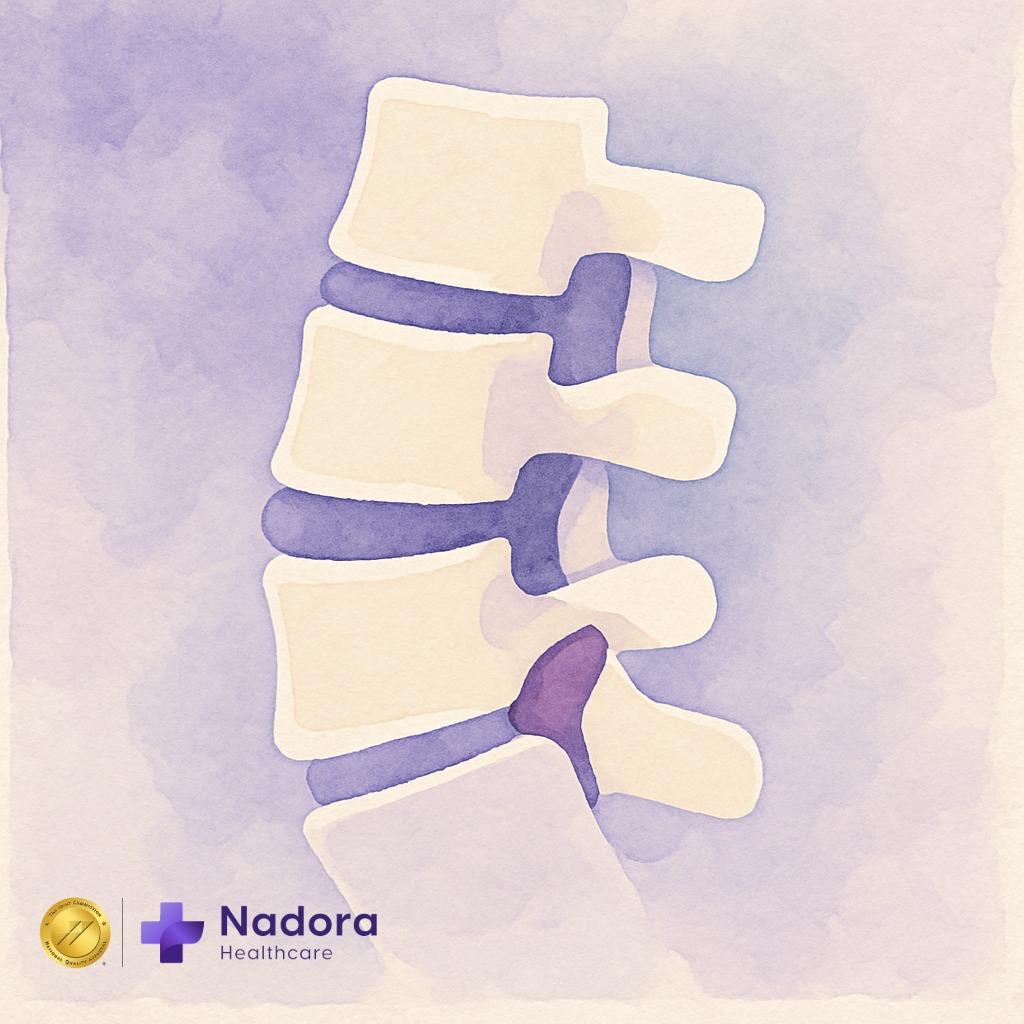
Back pain can have many causes, but one of the most common — and often misunderstood — is spondylolisthesis, a spinal condition that occurs when one vertebra slips forward over the one below it. This misalignment can put pressure on nearby nerves, leading to pain, stiffness, and even weakness in the legs. Fortunately, with the right diagnosis and care from a spine specialist at Nadora Healthcare, patients can find relief and restore stability to their spine.
Understanding Spondylolisthesis
The word spondylolisthesis comes from Greek: “spondylo” meaning vertebra, and “listhesis” meaning to slip. The condition can occur anywhere in the spine, but it most commonly affects the lower back (lumbar region). Depending on the severity of the slippage, it can cause anything from mild discomfort to severe nerve compression and chronic pain.
There are different types of spondylolisthesis, including:
- Degenerative spondylolisthesis, which develops over time as the discs and joints wear down.
- Isthmic spondylolisthesis, caused by a stress fracture in the vertebra, often from sports or repetitive strain.
- Congenital spondylolisthesis, present at birth due to abnormal bone development.
- Traumatic or pathologic spondylolisthesis, resulting from injury, surgery, or disease.
No matter the cause, the result is the same — instability in the spine and potential nerve irritation that can disrupt daily life.
Symptoms of Spondylolisthesis
The symptoms of spondylolisthesis vary based on how much the vertebra has shifted. Common signs include:
- Persistent lower back pain, often described as aching or stiffness
- Pain that radiates into the buttocks, thighs, or legs
- Tightness or spasms in the hamstrings
- Numbness, tingling, or weakness in the legs or feet
- Difficulty standing, walking, or bending for long periods
In severe cases, spondylolisthesis can lead to significant nerve compression, affecting mobility and quality of life.
Diagnosis and Evaluation at Nadora Healthcare
At Nadora Healthcare, every patient begins with a thorough evaluation by a spine specialist who is experienced in diagnosing spinal alignment issues. The diagnostic process typically includes a physical exam to assess posture, flexibility, and nerve function, as well as imaging such as X-rays or MRI scans to determine the degree and location of vertebral slippage.
Your spine specialist will also review your medical history and symptoms to develop a personalized treatment plan that targets both the cause of your pain and the functional limitations it creates.
Treatment Options for Spondylolisthesis
Treatment for spondylolisthesis depends on the severity of the condition and the level of discomfort. Many patients respond well to non-surgical care, which focuses on stabilizing the spine, reducing pain, and improving mobility.
At Nadora Healthcare, non-surgical options may include:
- Medication management to reduce inflammation and discomfort
- Bracing to provide spinal support and prevent further slippage
- Targeted injections to relieve nerve pain and inflammation
- Activity modification and ergonomic guidance to reduce strain on the back
When non-surgical treatments are not enough to control pain or when slippage progresses, surgical intervention may be considered. In such cases, your spine specialist will discuss options like spinal fusion or decompression surgery to realign the vertebrae, relieve nerve pressure, and restore stability. These procedures are performed using advanced techniques designed to minimize tissue disruption and promote faster recovery.
Why Choose a Spine Specialist at Nadora Healthcare?
Choosing the right provider is crucial when it comes to spinal care. At Nadora Healthcare, patients benefit from the expertise of fellowship-trained spine specialists who focus exclusively on spinal conditions. They combine advanced diagnostic technology with a patient-first philosophy, ensuring that each person receives individualized, evidence-based care.
What truly sets Nadora Healthcare apart is its commitment to long-term outcomes. The team doesn’t just treat the symptoms — they address the root cause of the problem to help patients move, live, and feel better for years to come.
If you’re living with lower back pain, stiffness, or radiating leg discomfort, don’t wait to get answers. Schedule a consultation with a spine specialist at NadoraHealthcare.com/Spine and take the first step toward lasting relief, improved stability, and a healthier spine.