Chronic back pain can dramatically affect your mobility, productivity, and overall quality of life. While not all spine issues require surgery, many do demand intervention beyond rest, medication, or physical therapy. That’s where minimally invasive spine procedures like Radiofrequency Ablation (RFA), Medial Branch Blocks (MBB), and Epidural Steroid Injections (ESI) come in.
If you’re looking for a trusted spine doctor near me, Nadora Healthcare offers advanced, non-surgical pain management strategies performed by experienced specialists: Dr. Scott Dhupar, a board-certified and fellowship-trained orthopedic spine surgeon, and Dr. K. Soraya Heidari, a fellowship-trained orthopedic spine surgeon. Let’s explore how these three procedures compare—so you can better understand your treatment options.
What Is an Epidural Steroid Injection (ESI)?
Epidural Steroid Injections are commonly used to treat inflammation of spinal nerves caused by disc herniations, spinal stenosis, or degenerative disc disease. The injection delivers a combination of corticosteroids and anesthetic into the epidural space, aiming to reduce inflammation and relieve nerve-related pain.
- Best For: Radiating leg or arm pain (sciatica or cervical radiculopathy)
- Onset of Relief: Within a few days
- Duration: Weeks to months
- Purpose: Primarily diagnostic and therapeutic
At Nadora Healthcare, ESIs are guided with fluoroscopy to ensure precision, and are often the first step in a non-surgical pain management plan.
What Is a Medial Branch Block (MBB)?
A Medial Branch Block is a targeted injection of anesthetic near the medial branch nerves, which carry pain signals from the small facet joints of the spine. The primary goal of this procedure is diagnostic—to confirm whether the facet joints are the source of your pain.
- Best For: Suspected facet joint pain in the cervical, thoracic, or lumbar spine
- Onset of Relief: Immediate (if the facet joint is the pain source)
- Duration: Short-term (hours to a day or two)
- Purpose: Diagnostic (used to determine candidacy for RFA)
If pain relief is significant after an MBB, this confirms that you may be a candidate for radiofrequency ablation.
What Is Radiofrequency Ablation (RFA)?
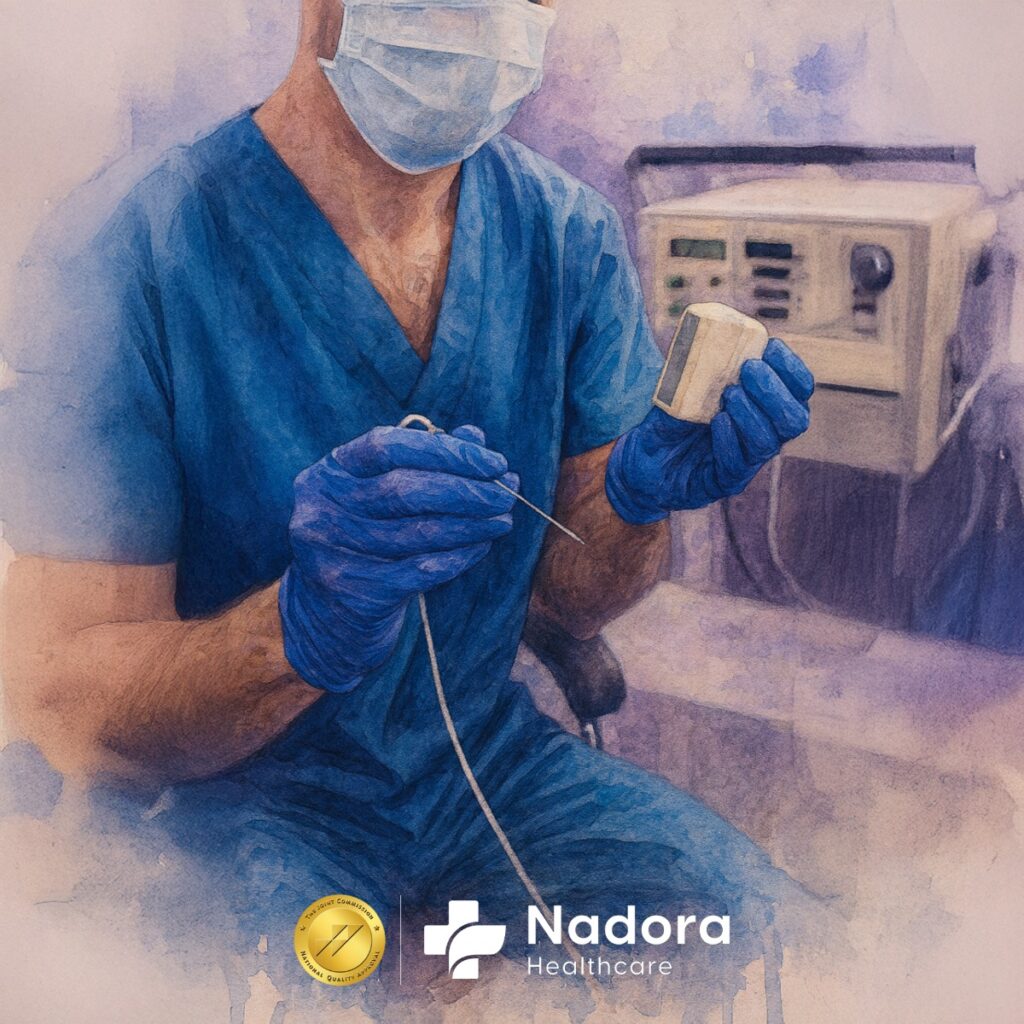
Radiofrequency Ablation uses a small needle and electrical current to heat and disable specific nerves transmitting pain signals. It is considered a longer-lasting treatment following a successful medial branch block.
- Best For: Chronic facet joint pain in the neck or lower back
- Onset of Relief: 1–3 weeks post-procedure
- Duration: 6–12 months, sometimes longer
- Purpose: Therapeutic (pain relief)
RFA at Nadora Healthcare is performed by our spine specialists using advanced imaging guidance for accuracy and safety.
Which Option Is Right for You?
Choosing between ESI, MBB, and RFA depends on your diagnosis and response to earlier treatments. Often, these procedures are used together in a stepwise approach:
- Epidural Injection if nerve inflammation is suspected
- Medial Branch Block to confirm facet joint involvement
- Radiofrequency Ablation for longer-term relief following a successful MBB
A spine doctor near me at Nadora Healthcare will assess your condition and walk you through the most effective options.
Schedule a Consultation With a Spine Doctor Near Me
If you’re experiencing chronic back or neck pain, don’t wait. A spine doctor near me at Nadora Healthcare—Dr. Scott Dhupar or Dr. Soraya Heidari—can provide minimally invasive solutions that offer relief without surgery.
Schedule your consultation today and take the first step toward lasting pain management.