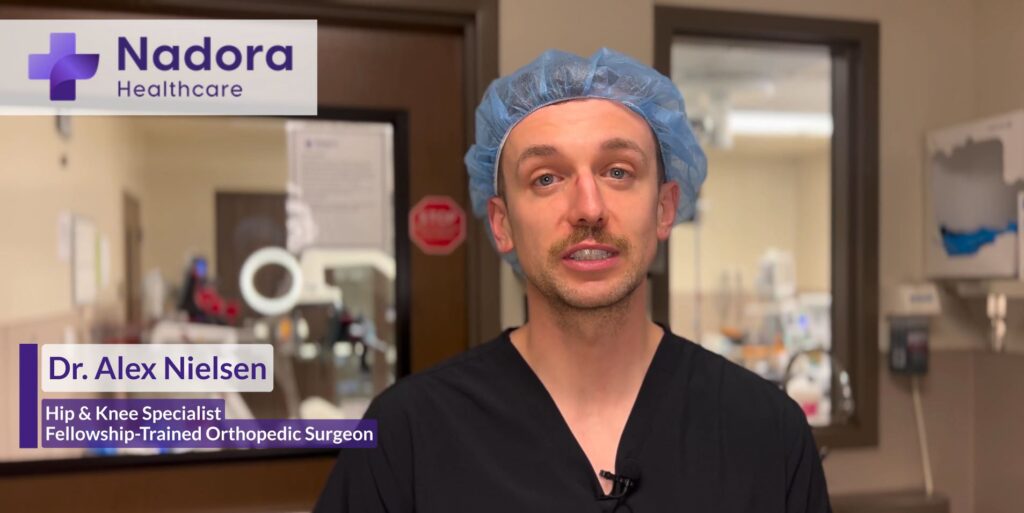
For patients considering knee replacement, one of the most common questions is whether a minimally invasive approach is better than a traditional procedure. In a recent video, Dr. Alex Nielsen—often sought out by patients searching for a knee doctor near me—breaks down the key differences between these two surgical techniques and what they mean for recovery and long-term outcomes at Nadora Healthcare.
What Is a Traditional Total Knee Replacement?
A traditional total knee replacement is a well-established procedure used to treat advanced knee arthritis and joint damage. It involves replacing the worn-out joint surfaces with artificial components designed to restore function and reduce pain.
This approach provides excellent long-term outcomes and remains the standard for many patients, particularly when visibility and access to the joint are critical for proper alignment and implant placement.
What Is a Minimally Invasive Knee Replacement?
Minimally invasive knee replacement uses a smaller incision and is designed to reduce disruption to surrounding soft tissues. The goal is to perform the same joint replacement while preserving as much muscle and tendon integrity as possible.
When patients search for a knee doctor near me, they are often interested in whether this approach can lead to a faster recovery. In some cases, minimizing tissue disruption can support improved early mobility and less postoperative discomfort.
Key Differences That Matter By A Knee Doctor Near Me
The primary difference between minimally invasive and traditional knee replacement lies in surgical exposure and tissue handling. Minimally invasive techniques aim to limit soft tissue disruption, while traditional approaches provide broader access to the joint.
Dr. Nielsen emphasizes that the best approach is not one-size-fits-all. Factors such as patient anatomy, severity of joint damage, and overall health all play a role in determining which technique is most appropriate.
Why Surgical Expertise Matters More Than Technique Alone
Patients often focus on the type of procedure, but the experience of the surgeon is just as important. A knee doctor near me should be able to evaluate each case individually and recommend the approach that will deliver the most reliable outcome.
As a fellowship-trained knee specialist, Dr. Nielsen prioritizes precision, alignment, and long-term function over trends. Whether using a minimally invasive or traditional technique, the goal remains the same: a stable, well-functioning knee that lasts.
Choosing the Right Knee Replacement Approach
Knee replacement is not just about the surgery—it is about achieving lasting pain relief and restoring mobility. During evaluation at Nadora Healthcare, Dr. Nielsen discusses the advantages and limitations of each approach, helping patients understand what to expect.
For those searching for a knee doctor near me, having access to both traditional and minimally invasive options ensures that treatment is tailored—not predetermined.
Advanced Knee Care at Nadora Healthcare
Understanding the differences between minimally invasive and traditional knee replacement empowers patients to make informed decisions. At Nadora Healthcare, care is guided by fellowship-trained expertise and a commitment to outcomes that extend well beyond the operating room.
Dr. Alex Nielsen’s approach ensures that every patient receives the right procedure for their condition, with a focus on restoring movement, reducing pain, and delivering long-term success.