
Most people are familiar with herniated discs in the neck or lower back, but thoracic disc herniation, which occurs in the mid-back, can also cause significant pain and neurological symptoms. Though less common, thoracic disc herniations can be complex due to the location’s proximity to the spinal cord. Fortunately, if you’re searching for a spine doctor near me, Nadora Healthcare provides expert evaluation and treatment through Colorado’s only Spine Center of Excellence.
At Nadora Healthcare, thoracic spine conditions are diagnosed and treated by two highly trained spine specialists: Dr. Scott Dhupar, a board-certified and fellowship-trained orthopedic spine surgeon, and Dr. K. Soraya Heidari, a fellowship-trained orthopedic spine surgeon. Their combined expertise ensures patients receive personalized, evidence-based care for even the most challenging spinal disorders.
What Is a Thoracic Disc Herniation?
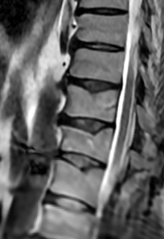
The thoracic spine refers to the middle portion of the spine, made up of 12 vertebrae (T1–T12) between the cervical (neck) and lumbar (lower back) regions. A thoracic disc herniation occurs when the inner gel-like core of a spinal disc protrudes through its outer layer, compressing the spinal cord or nearby nerve roots.
While disc herniations are more common in the lumbar and cervical spine due to greater motion and load, thoracic herniations account for approximately 1% of all disc herniation cases. However, they can pose serious risks due to the confined space around the spinal cord in the thoracic region.
Causes and Risk Factors
Common causes and risk factors for thoracic disc herniation include:
- Degenerative disc disease and age-related wear
- Trauma or injury to the mid-back
- Repetitive strain or poor posture
- Genetic predisposition to disc weakness
- Spinal deformities, such as scoliosis
Because the thoracic spine is less mobile, herniations here often go unnoticed until symptoms become severe.
Symptoms That Shouldn’t Be Ignored
Thoracic disc herniation can lead to a variety of symptoms depending on the size and location of the herniation. Patients may experience:
- Mid-back pain or stiffness
- Radiating pain to the chest or abdomen
- Numbness or tingling in the torso or legs
- Muscle weakness in the lower body
- Difficulty walking or maintaining balance
- Bowel or bladder dysfunction (in rare, severe cases)
These symptoms may mimic heart, gastrointestinal, or lung conditions, which is why thorough evaluation by a spine doctor near me is essential for accurate diagnosis.
Expert Diagnosis at Nadora Healthcare
At Nadora Healthcare, the diagnostic process begins with a comprehensive evaluation led by Dr. Dhupar or Dr. Heidari. This includes:
- Medical history and symptom review
- Neurological and physical exam
- Advanced imaging such as MRI or CT scans to pinpoint the location and severity of the herniation
- Functional assessments to evaluate impact on movement and coordination
This detailed approach ensures patients receive a clear diagnosis and appropriate treatment plan tailored to their needs.
Non-Surgical Treatment Options
Many cases of thoracic disc herniation can be managed with conservative, non-surgical care. Nadora Healthcare offers:
- Activity modification and postural correction
- Non-steroidal anti-inflammatory medications (NSAIDs)
- Epidural steroid injections to reduce inflammation
- Referral to physical therapy through trusted external providers
Patients are closely monitored, and treatment plans are adjusted based on progress and symptom relief.
Surgical Options for Severe Herniation By A Spine Doctor Near Me
If neurological symptoms worsen or conservative care is ineffective, surgery may be necessary to relieve spinal cord or nerve compression. Nadora Healthcare’s spine surgeons offer advanced surgical procedures, including:
- Thoracic discectomy – removal of the herniated portion of the disc
- Laminectomy – removing part of the vertebra to access and decompress the spine
- Spinal fusion – stabilizing the spine if necessary after disc removal
Whenever possible, minimally invasive techniques are used to reduce recovery time and improve outcomes.
Why Choose Nadora Healthcare for Thoracic Spine Treatment?
Patients choose Nadora Healthcare because:
- The practice includes Colorado’s only Spine Center of Excellence
- Dr. Dhupar and Dr. Heidari provide fellowship-level spine expertise
- Personalized care plans prioritize patient goals and long-term function
- The team excels at diagnosing complex spine conditions other providers may overlook
- State-of-the-art imaging and surgical technology ensure precision and safety
Schedule Your Consultation Today
If you’re experiencing unexplained mid-back pain or neurological symptoms, don’t delay. A spine doctor near me at Nadora Healthcare can help determine whether a thoracic disc herniation is the cause—and recommend the right path toward lasting relief.
Contact us today to schedule a consultation with Dr. Scott Dhupar or Dr. K. Soraya Heidari, and start your journey toward expert spinal care.